

The first properly cold evening of autumn tends to arrive mid-conversation, just as the sun drops behind the fence and everyone's hands close a little tighter around a mug. A patio heater buys back a few weeks at each end of the season, but gas, electric and infrared models go about it in very different ways. Choose the wrong one and you will spend real money heating the air above the neighbour's hedge.
How each type actually heats
Gas
A gas heater burns propane or butane at an open burner and bounces the heat off a metal reflector. Output is high — domestic models commonly range from around 3 kW up to 13 kW — and the warmth is broad and immediate. It is also silent apart from a low roar, and utterly useless in a stiff breeze, because the flame simply loses its heat to moving air.
Electric
These range from a 1.5–2 kW glowing element with a reflector to fan-assisted units that push warm air across a small area. They are easy to switch on, need no fuel, and hum quietly. The catch is that most outdoor sockets and extension leads will only carry a limited load, and the heat a 2 kW unit produces is gentler than a big gas burner.
Infrared
Infrared heaters emit radiant heat, which warms people, furniture and paving rather than the air between them. It feels almost instant — like standing in weak sun — but only if you are roughly in the beam. Wall-mounted and ceiling-mounted infrared units suit a covered pergola or a wall behind a bench far better than an open lawn, and they work best in still air.
Running costs: the maths that actually matters
Ignore vague claims about cheap running and do the sum yourself. For any electric heater:
kW rating × hours used × your unit rate = cost per session
So a 2 kW heater left on for three hours uses 6 kWh. Multiply that by whatever you pay per kWh on your current tariff and you have the number. Energy prices move, so check your own bill rather than trusting an old figure.
Gas is harder to compare directly, but the principle is the same. Manufacturers quote fuel consumption in grams per hour, or in kW. Divide the net weight of gas in a cylinder by that hourly figure to see roughly how many hours a refill gives you, then divide the refill price by those hours. In many UK gardens, gas works out cheaper per hour of heat delivered, but you pay for that with cylinder deposits, refills and a trip to the supplier.
Two habits cut costs more than any clever purchase:
- Heat people, not space. Aim one heater at the seating rather than trying to warm a whole patio.
- Use it in bursts. Infrared on for twenty minutes while everyone is outside beats a gas burner ticking over all evening.
Warmth coverage: how far the heat really reaches
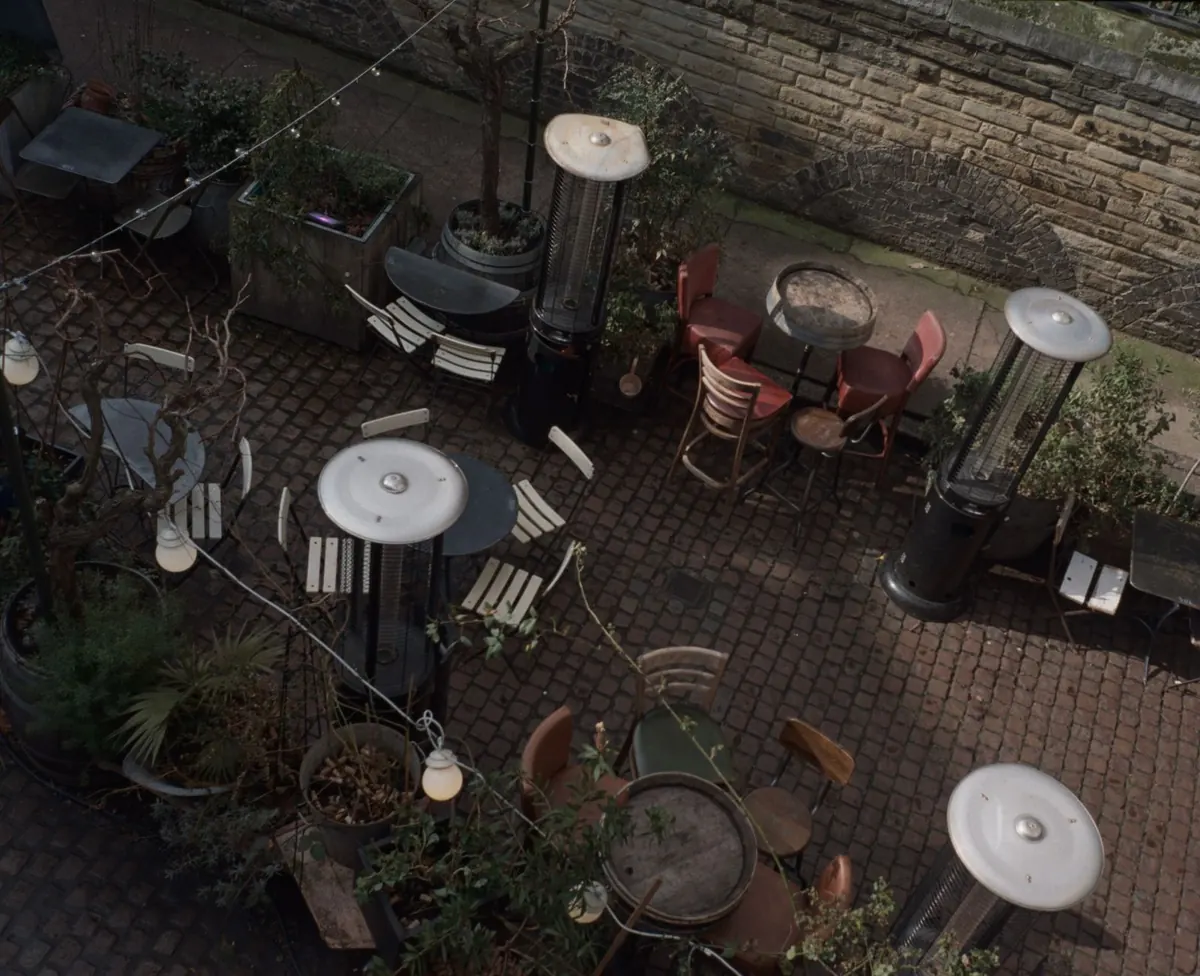
A large mushroom-style gas heater might keep a circle roughly three to four metres across comfortable on a still evening. A 2 kW electric heater is more like a two-metre pool of warmth in front of it. A wall-mounted infrared unit throws a beam — think of a shape about a metre and a half to two metres wide at a distance of two to three metres.
Shelter changes all of this. The same cheap heater under a pergola with one side screened will feel twice as effective as it does on an exposed corner, because moving air is what steals most of your heat. Before buying, stand where you actually sit on a breezy evening and note which direction the wind comes from.
Safety clearances and siting
Most of the rules are simple, and all of them matter:
- Never run a gas patio heater indoors, in a tent, or under a gazebo with the sides zipped down. They produce carbon monoxide and need open air.
- Keep the top and sides clear of combustible material. A metre is a common manufacturer minimum — read your own instructions, because parasols, fence panels and plastic furniture all burn.
- Stand gas cylinders upright on firm ground, check hoses and regulators for cracking, and have any gas work done by a Gas Safe registered engineer.
- For electric models, use an outdoor socket with RCD protection and a rating of IPX4 or better. Route cables where nobody will trip over them.
- Keep children and pets out of the direct beam, and never drape towels or washing over a heater to dry.
A wall-mounted infrared panel aimed down at a seating area is usually the safer arrangement than a freestanding flame at knee height, particularly in a household with young children.
Weather resistance and storage
Look for an IP rating on anything electric. IPX4 means it survives splashes; IPX5 and IPX6 cope with more driving rain. Stainless steel and aluminium frames last far better outdoors than powder-coated steel, which tends to rust first at the joints and fixings.
Buy a cover that fits properly and use it — but never cover a heater while it is still warm. Halogen and quartz elements are fragile, so store freestanding units somewhere dry over winter rather than leaving them out. Gas cylinders are best kept upright, outside, in a well-ventilated spot away from drains, ignition sources and anything that could fall on them.
Matching a heater to your garden
- Small terrace, one table: a tabletop gas heater or a single 1.5 kW electric unit, positioned to one side.
- Covered pergola with seating underneath: ceiling or wall-mounted infrared, switched on as people sit down.
- Open patio, large gatherings: a freestanding gas heater, plus a windbreak, or accept that you are heating the sky.
Before the first cold evening
Sit in the spot you plan to heat, at dusk, and work out where the wind hits and where the sockets are. Check what your outdoor circuit can safely carry before buying a 3 kW appliance, and check that a gas cylinder is actually available locally rather than discovering a shortage in October. Clean the reflector and element at the end of the season, cover the unit, and store fuel sensibly. Do that, and the patio stays in use long after the tomatoes have given up.
Photo: freepsdgraphics / Pixabay