
Victorian terraces gave most of their space to the house, and the garden behind got what was left: a long, thin strip, often four to five metres wide, overlooked on both sides and at the far end. That shape can feel like a corridor. It can also be one of the most satisfying gardens to design, because the constraints are so clear. You know the width. You know where the sun lands and where the neighbours' windows look down. Everything else is arrangement.
Work With the Length, Not Against It
The common mistake is to treat a narrow garden as a rectangle to be filled: a lawn in the middle, a border down each side, a shed at the end. It works, but it reads as a passage you walk through rather than a place you sit in.
Try this instead. Run the main path along one side rather than down the centre, and let the eye travel diagonally across the plot. Suddenly the garden has a far corner to look towards, and the space you sit in feels wider than it is. Where a path must cross the garden, cross it at an angle.
Width is fixed, so borrow what you can from height, light and colour. Climbing plants, a small tree with an open canopy, a warm-toned paving, a bright seat at the end of the view: all of these stretch a thin plot without moving a single fence panel.
Zoning: Three or Four Rooms in a Thin Strip
Rather than one long space, think of it as a sequence. A typical plot breaks down comfortably into three zones: the area just outside the back door for eating and shelter, a middle zone for greenery and a quiet seat, and a working end for storage, bins and compost.
Each zone needs a threshold, so you feel you have arrived somewhere rather than simply walked further. Any of these will do the job:
- A single step, or a change of paving from grey to buff
- A pair of matching pots flanking the path
- A low hedge of box, yew or lavender, kept clipped to about knee height
- A timber arch or a simple metal hoop for a rose
- A sleeper edge marking a small change in level
How long should each zone be?
As a rough guide, a space starts to feel like a room when its length is no more than about one and a half times its width. In a four-metre-wide garden, keep zones under roughly six metres and they will read as separate places. Anything longer and you are back to a corridor.
Planting When the Beds Are the Width of a Door
Narrow borders cannot hold much depth, so plant vertically instead. Aim for three layers: something tall at the back, mid-height shrubs or perennials in front, and low carpeting plants or bulbs at the edge. The same principle applies to a single border as to a whole garden.
Climbers do the heavy lifting
Wires fixed to a fence, a trellis panel or a simple wooden frame will support jasmine, honeysuckle, trachelospermum, climbing roses or ivy. These give you metres of greenery for the cost of a few centimetres of ground. Keep them tidy and away from neighbouring structures, and remember that vigorous climbers need annual pruning if they are not to swallow the whole plot. Running bamboos should always go in with a root barrier.
Screening without losing the light
Overlooked boundaries are the hardest part of a terrace garden. A six-foot fence solves the eye-level problem but does nothing about first-floor windows. The answer is to raise the screen above head height without blocking sun from the beds.
Pleached trees, columnar varieties and slim evergreen shrubs work well in a border only 60cm deep. So does a pergola with tensioned wires over the seating area, or a shade sail set high enough to walk under. If you are raising fencing or building a structure near a boundary, check the position of your boundary and any height limits with your local planning authority before you order materials.
The Floor: Paving, Gravel and Level Changes
In a four-metre garden, two 60cm borders leave 2.8 metres of centre. That is plenty for a table and chairs with room to walk past. Use fewer materials rather than more: a single paving type with a gravel or planted margin will look calmer than a patchwork.
Gravel is inexpensive and sounds pleasant underfoot, but it migrates into beds and encourages weeds. A stabilised honeycomb grid holds it in place and makes it easier to sweep. Stepping stones set into thyme or mind-your-own-business give a softer route through planting.
Changing levels adds interest, but keep it modest. A raised deck can hide storage underneath, though it needs ventilation and you must not bridge the damp-proof course of the house. If you are unsure about drainage, retaining or proximity to the building, take advice from a qualified landscaper or surveyor before digging.
Furniture and Seating That Earns Its Space
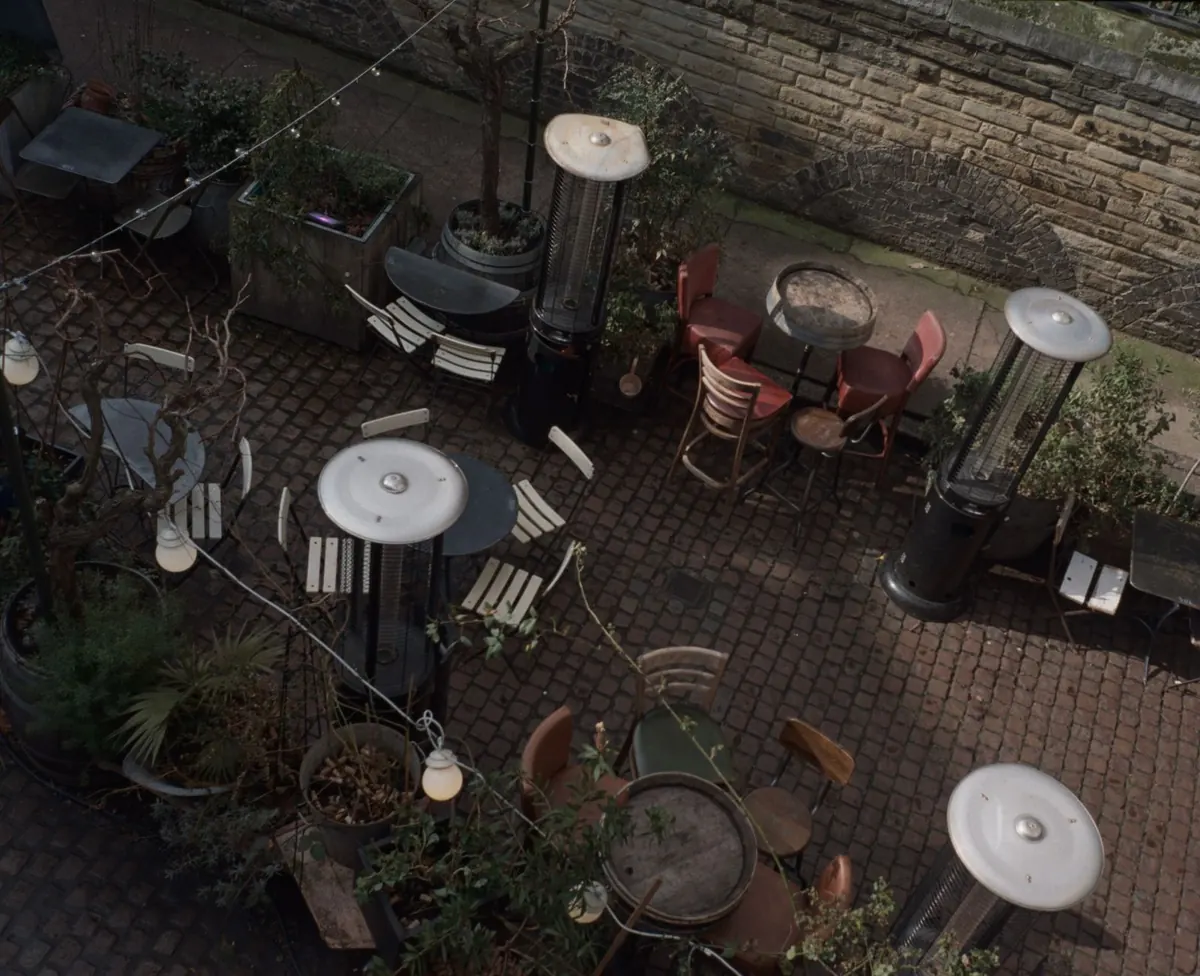
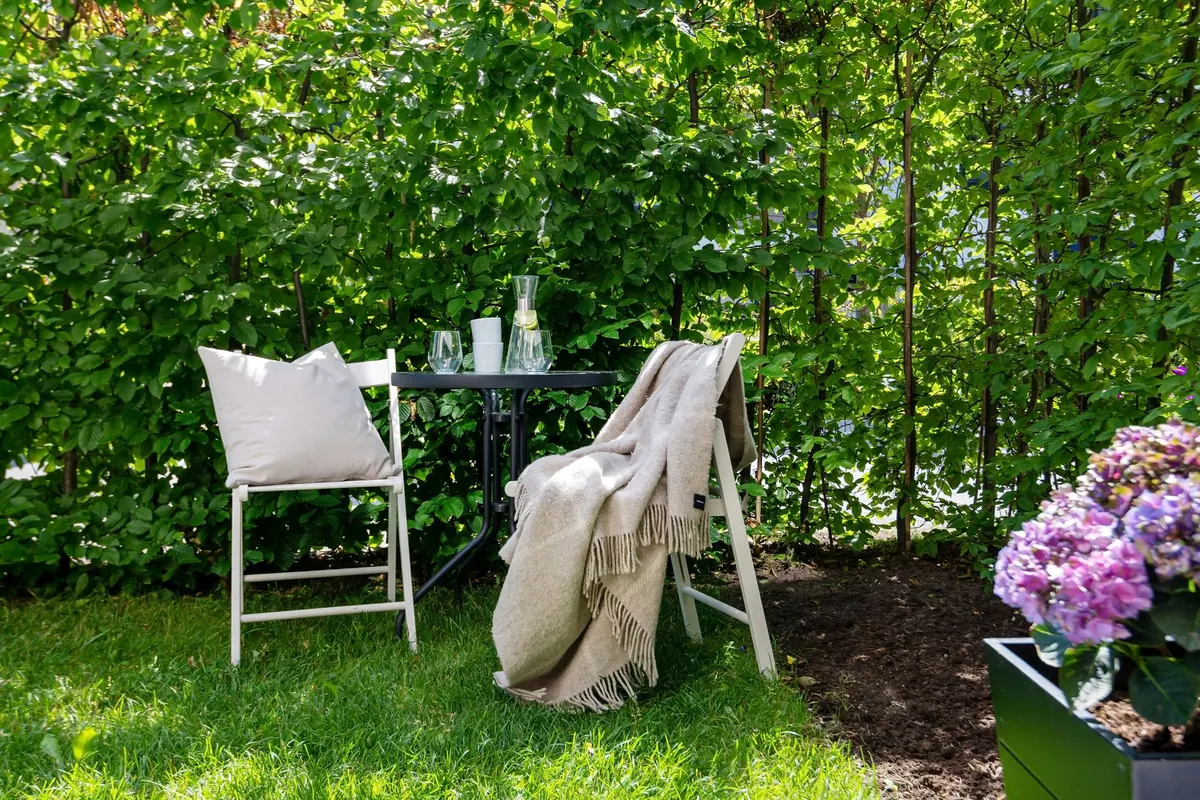
Keep seating out of the circulation route. A bench fixed along the boundary takes up almost nothing, and a wall-mounted folding table gives you a place to put a drink without a permanent footprint. A small bistro set suits a two-metre patio better than a six-seater table you use twice a year.
Two small sitting spots usually beat one large one. A pair of chairs by the back door for morning coffee, and a bench at the far end in the afternoon shade, will make the garden feel longer and more generous.
Bins, Bikes and the Unromantic End
The far end of a terrace garden is often the shadiest and most overlooked, which makes it the right place for the things you do not want to look at. Group the shed, bin store, bike shelter and compost together and screen the whole run with trellis and an evergreen climber. One screened working zone looks deliberate; three scattered ones look like clutter.
If you have side access from the front, consider putting the bins near the house instead, where they are easier to move on collection day. Small decisions like this save a surprising amount of daily irritation.
A Practical Order of Work
- Measure the plot properly and note where the sun falls at different times of day, and which windows overlook you.
- Sketch the zones and mark them out in the garden with canes and string before committing to anything.
- Sort the boundaries first: repair fences, fit wires or trellis, and plant screening trees early so they can grow.
- Deal with levels, drainage and hard surfacing.
- Plant structure next, then fill in with perennials, grasses and bulbs.
- Buy furniture and storage last, once you know how you actually use the space.
Hard landscaping is expensive and awkward to undo; plants are neither. Get the bones right, choose a palette of two or three materials you genuinely like, and the planting can be changed as often as you change your mind.
Photo: KarenJubinville / Pixabay